Reading the Room: The Sophisticated Gentleman's Guide to Real-Time Emotional Attunement
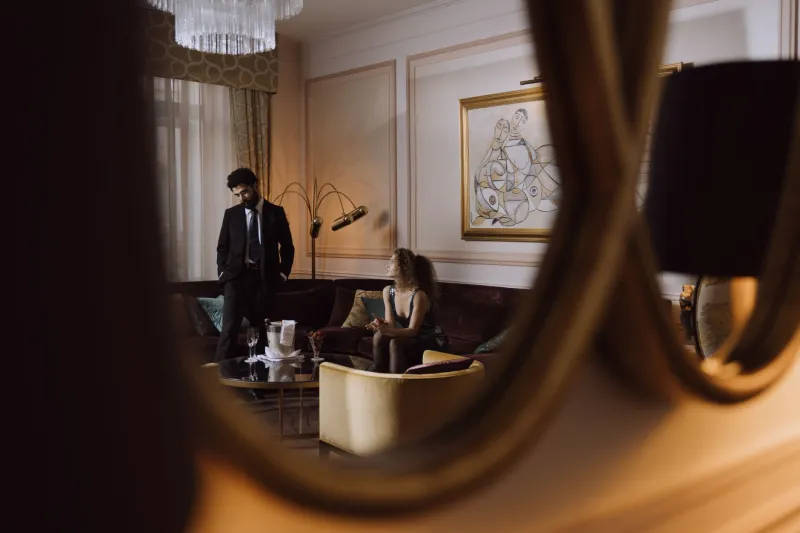
There is a particular kind of intelligence that no itinerary can manufacture. It does not arrive in a briefcase or announce itself with a well-chosen boutonniere. It lives, instead, in the space between words — in the half-second pause before a reply, in the way a companion's posture opens or closes almost imperceptibly over the course of an hour. The gentleman who has learned to read these signals, and to respond to them without fanfare, occupies an entirely different category of company.
Professional companionship at its finest is not a performance delivered to a passive audience. It is a living exchange, one that breathes and shifts in ways that even the most carefully constructed plan cannot anticipate. The question, then, is not what you arranged in advance — but how fluently you adapt when the evening begins to write its own story.
The Difference Between Observation and Surveillance
There is a meaningful distinction between watching someone and truly seeing them. Surveillance is mechanical; it catalogs behaviors without understanding their weight. Genuine observation, by contrast, is an act of empathy — a willingness to be present enough that another person's experience registers in your own awareness.
For the discerning client, this means entering an evening with open attention rather than a fixed agenda. It means noticing when laughter comes easily and when it feels slightly performed. It means recognizing that a companion who seemed warm during an initial exchange may require a few quiet minutes to settle into the physical space of a new venue. These are not signs of difficulty — they are invitations to demonstrate that you are paying attention in the way that actually matters.
The temptation, particularly for men accustomed to directing outcomes in their professional lives, is to interpret any ambiguity as a problem requiring a solution. In the context of a companionship encounter, however, ambiguity is often simply the natural texture of human interaction. Allowing it to exist without immediately filling it can itself be a form of sophistication.
Calibrating Energy Without Performing It
Emotional attunement is not the same as emotional mimicry. A gentleman who mechanically mirrors every shift in a companion's mood risks coming across as studied rather than sincere — a social algorithm rather than a human presence. The goal is not to replicate another person's energy but to respond to it in ways that feel organic and proportionate.
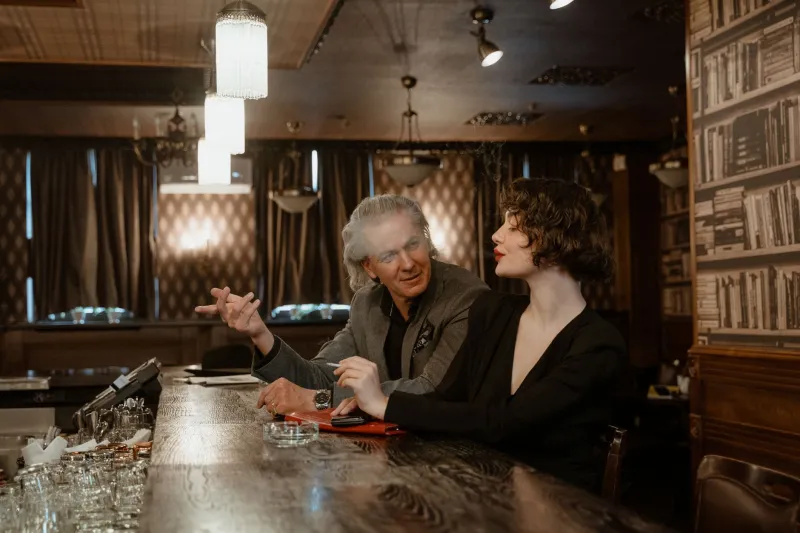
Consider the transition points within a typical evening. The opening moments at a restaurant or lounge carry a particular charge — the slight formality of first impressions, the mutual calibration that occurs as two people settle into proximity. As the evening progresses, that charge naturally softens. Conversation deepens or widens. Shared humor emerges. A different quality of ease becomes available.
The refined gentleman recognizes each of these transitions and adjusts accordingly. He does not arrive at dinner in the same register he might occupy two hours later over a quiet drink. He allows the evening to have its own arc rather than insisting on a consistent tone from the first moment to the last.
This requires a particular kind of self-awareness — an ongoing internal check-in that asks not only how is she responding? but also what am I currently projecting? Nervous energy, even when well-disguised, tends to create a corresponding tension in the person across the table. Genuine calm, conversely, tends to invite it in return.
When the Chemistry Shifts
Not every evening proceeds along a smooth upward trajectory. There are moments — sometimes subtle, sometimes unmistakable — when the chemistry between two people recalibrates. A topic lands differently than expected. A venue proves less comfortable than anticipated. The energy that felt promising an hour ago has quietly shifted into something more muted.
These moments are not failures. They are data. The gentleman who responds to a shift in chemistry with grace — by gently redirecting conversation, suggesting a change of scenery, or simply acknowledging that the pace of the evening might benefit from slowing — demonstrates a quality that is genuinely rare: the ability to prioritize the actual experience over the planned one.
What this looks like in practice varies widely. It might mean recognizing that a companion who seemed enthusiastic about a particular restaurant is, in fact, finding the noise level fatiguing — and suggesting an early move to a quieter venue without making the adjustment feel like a critique. It might mean noticing that a line of conversation, however interesting to you personally, has begun to feel one-directional and pivoting toward something more collaborative.
The underlying principle is consistent: the evening belongs to both of you. Acting accordingly, in real time, is what genuine attentiveness looks like.
Presence as a Practiced Discipline
It would be convenient if emotional attunement were simply a personality trait — something one either possesses or does not. The reality is more demanding and, ultimately, more hopeful. Real-time awareness is a skill that improves with deliberate practice and honest self-reflection.
For many professionals accustomed to operating in structured, outcome-oriented environments, the first step is simply learning to slow down. Not every silence requires filling. Not every lull in conversation signals a problem. The man who can sit comfortably in a moment of quiet — without reaching immediately for his phone, without launching into a prepared anecdote — communicates something profound about his capacity for genuine presence.
Beyond stillness, attunement is cultivated through curiosity. Approaching a companion with authentic interest — in her perspective, her humor, her way of moving through a conversation — creates the conditions under which real chemistry can develop. It transforms an encounter from a curated experience into something that feels, however briefly, like genuine human contact.
That quality of contact, more than any particular venue or gesture, is what lingers after an evening concludes. It is what distinguishes an encounter that was pleasant from one that was genuinely memorable. And it begins, always, with the decision to actually pay attention.
The Long View
For gentlemen who engage with professional companionship regularly, the cultivation of emotional attunement pays dividends that extend well beyond any single evening. Companions who feel genuinely seen — rather than simply accommodated — are more likely to bring their full engagement to subsequent encounters. The reputation one builds as a client who is truly present is among the most valuable assets in this space, and it is built entirely in the small, unscripted moments that no itinerary can anticipate.
The room is always speaking. The question is simply whether you are listening.