The Quiet Intelligence: How Attentiveness and Emotional Awareness Define the Truly Distinguished Client
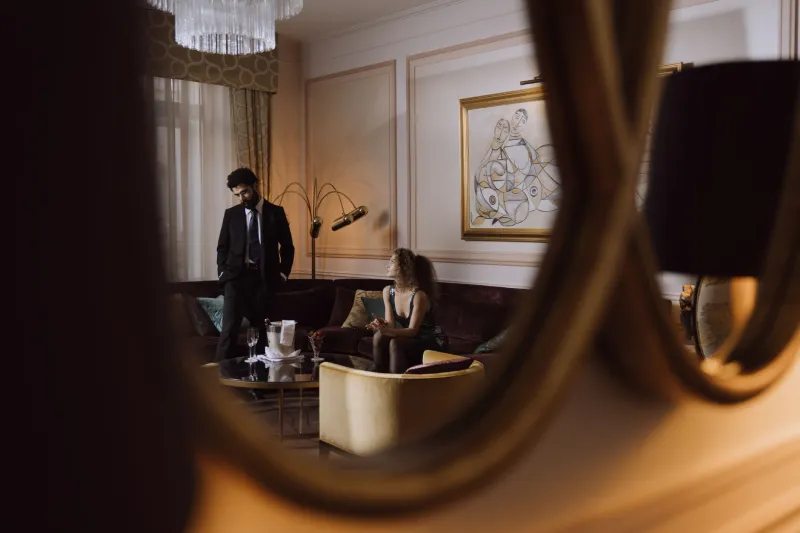
There is a category of client that companions at the upper tier of professional services speak about with genuine warmth. He is not always the most conventionally successful in the room. He does not necessarily arrive with the most elaborate plans or the most impressive credentials. What distinguishes him is something quieter and considerably rarer: he pays attention. Not in a watchful or calculating way, but in the manner of a person who has learned that the most important information in any human encounter is rarely spoken aloud.
This quality—call it attentiveness, emotional intelligence, or simply awareness—is the defining characteristic of the truly distinguished client. It cannot be purchased, rehearsed convincingly, or substituted with charm. It must be developed. And its development, for the gentleman who commits to it, transforms not only his experiences with companions but the quality of every significant relationship in his life.
What Emotional Intelligence Actually Means in This Context
The term emotional intelligence has become somewhat overused in professional development circles, to the point where it risks sounding abstract. In the specific context of companionship, it has a precise and practical meaning: the ability to perceive what another person is experiencing—particularly when they are not explicitly stating it—and to respond in a way that honors that experience.
This capacity operates on several levels simultaneously. It includes the ability to read physical cues: the slight shift in posture that signals discomfort, the quality of a smile that indicates genuine amusement versus polite accommodation, the pacing of responses that reveals whether a person is engaged or managing distance. It also includes the ability to register what is absent—topics not pursued, questions redirected, silences that carry weight.
For the gentleman who has spent most of his professional life in environments that reward directness and explicit communication, developing sensitivity to these subtler registers requires deliberate practice. The effort is worthwhile.
The Distinction Between Stated and Implied Boundaries
Much of the public conversation around boundaries in professional companionship focuses on explicit communication—and rightly so. Clear, stated parameters are the foundation of any arrangement that functions with integrity. But the gentleman who operates only at the level of explicit communication is working with incomplete information.
Implied boundaries—those communicated through tone, body language, topic deflection, or the gradual reduction of warmth—are equally real and equally deserving of respect. A companion who subtly redirects a conversation away from a particular subject is communicating something. A companion whose engagement becomes more formal in response to a specific kind of remark is providing information. The attentive gentleman receives this information without requiring it to be stated plainly, and adjusts accordingly.
This responsiveness is not merely courteous—it is the behavior of a person who understands that the quality of any shared experience depends on the genuine comfort of both parties. An evening in which one person is managing discomfort is not an exceptional evening, regardless of how it appears from the outside.
Creating an Atmosphere of Genuine Ease
The most consistent feedback that experienced companions offer about their finest clients is that those clients make them feel at ease. This is a more demanding standard than it might initially appear. Professional companions are skilled at maintaining composure and warmth across a wide range of circumstances. The client who genuinely creates ease is one who reduces the amount of professional management required—who, through his attentiveness and consideration, allows a companion to be more fully present rather than more carefully composed.
Practically, this begins before the evening's formal events. A gentleman who communicates clearly and without ambiguity in advance removes a significant source of low-level tension. One who arrives prepared—having thought through logistics, made appropriate reservations, and considered his companion's likely preferences—signals that she is not responsible for the success of the evening. That responsibility has been assumed by someone capable of carrying it.
During the encounter itself, ease is cultivated through consistency: between a gentleman's stated intentions and his actual behavior, between his expressed interest and his attentiveness, between the person he presents at the outset and the person he remains as the evening progresses. Inconsistency—however minor—registers acutely with people who spend considerable time reading others.
Observing Without Analyzing
There is an important distinction between attentiveness and surveillance. The gentleman who observes a companion's responses in order to understand her better is practicing empathy. The one who observes in order to identify leverage, test limits, or optimize outcomes is doing something categorically different—and companions, whose professional lives depend on their ability to read people accurately, will recognize the distinction immediately.
Genuine attentiveness is characterized by an absence of agenda. It is the simple act of being present with another person, interested in what they are actually experiencing rather than what they are supposed to be experiencing. This quality of attention is, paradoxically, most effective when it is least deliberate—when it arises from authentic curiosity rather than strategic intent.
The gentleman who finds himself calculating what a companion's signals mean for his own objectives has already lost the thread. The one who receives those signals as information about a person he is genuinely interested in is operating at an entirely different register.
Empathy as the Highest Form of Sophistication
In the wider culture, sophistication is often associated with knowledge, taste, and the accumulation of refined experiences. These are real qualities, and they contribute meaningfully to the character of an exceptional gentleman. But among companions who have spent years in the company of accomplished, cultured, and well-traveled men, the quality that consistently distinguishes the truly memorable client is empathy.
Not sympathy—which implies a kind of distance and condescension—but empathy: the genuine capacity to perceive and honor another person's inner experience. It is the quality that makes a companion feel seen rather than assessed, valued rather than employed, present rather than positioned.
This quality cannot be faked across an entire evening. It can be performed briefly, but sustained empathy requires that it be real. And the gentleman who has cultivated it—through deliberate attention to his own emotional life and genuine curiosity about the lives of others—will find that it transforms not merely his companionship experiences, but his capacity for connection in every dimension of his life.
That, ultimately, is what the finest companionship experiences offer: not an evening of managed impressions, but a genuine encounter between two people, made possible by the willingness of one to pay quiet, careful, and respectful attention.