Invisible by Design: A Professional's Guide to Digital Privacy When Engaging Companion Services in 2025
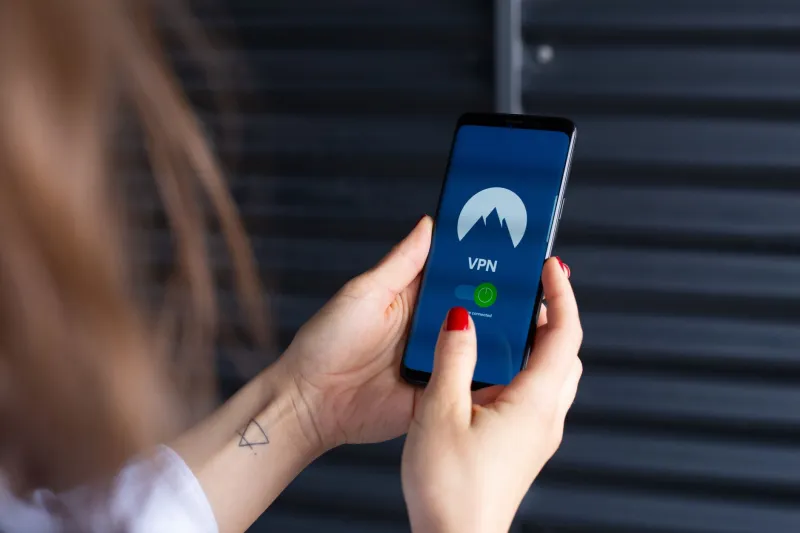
The landscape of digital privacy has shifted considerably in recent years. Where once a degree of anonymity was the default state of internet activity, 2025 presents a far more complex environment—one in which data brokers, device fingerprinting, and persistent tracking make genuine discretion an active pursuit rather than a passive assumption. For the professional gentleman who values both his personal reputation and the integrity of his private life, understanding this landscape is not optional. It is foundational.
This guide addresses the practical realities of digital privacy in the context of engaging with companion services, offering a structured approach that balances security with the sophistication appropriate to this category of experience.
Understanding Your Digital Footprint
Before implementing any privacy strategy, it is worth understanding precisely what a digital footprint consists of in this context. Every online interaction generates data: IP addresses logged by websites, browser fingerprints that identify devices even across private browsing sessions, location data embedded in photographs, payment records, and the metadata associated with every message sent through conventional platforms.
For the average user, this accumulation of data is largely invisible and largely inconsequential. For a professional whose reputation, relationships, or career could be affected by the disclosure of private activities, it represents genuine exposure. The first step toward meaningful discretion is acknowledging that exposure honestly, without alarm but with clear-eyed attention.
Secure Communication: Platforms That Merit Consideration
Not all messaging platforms are created equal, and the distinctions matter considerably when privacy is a priority. Standard SMS messages are stored by carriers and accessible under a range of legal and technical circumstances. Email, unless specifically encrypted, passes through servers where it may be retained indefinitely.
For initial contact and ongoing communication with companions or agencies, end-to-end encrypted platforms represent a meaningful upgrade. Signal, which employs open-source encryption and offers disappearing message functionality, has become a widely respected standard among privacy-conscious users across industries. Wickr Me, while less commonly known, offers comparable protections with additional enterprise-grade features.
When using any platform, the gentleman should configure disappearing message timers, avoid sending photographs that contain identifying metadata, and refrain from using a device registered to his primary identity for initial outreach. A secondary device—or at minimum, a secondary account on a privacy-respecting platform—provides an additional layer of separation.
The Case for Dedicated Devices and Separate Accounts
The concept of operational separation—maintaining distinct digital identities for distinct spheres of life—is well established in security-conscious professional environments. For the gentleman who engages with companion services, a version of this principle is worth adopting.
A dedicated device, purchased with cash and activated without connecting to a primary identity, eliminates the most direct forms of cross-contamination between private activity and professional or personal digital profiles. This approach, while it may seem elaborate, is increasingly common among executives and public figures who maintain multiple dimensions of private life.
For those unwilling or unable to maintain a separate device, a privacy-focused browser such as Brave—combined with a reputable VPN service and a secondary email address created through a provider like ProtonMail—provides a reasonable intermediate layer of protection.
Vetting Services Safely Online
The process of identifying and evaluating companion services carries its own digital risks. Search history, even in private browsing mode, may be visible to network administrators, shared Wi-Fi providers, or ISP-level monitoring depending on jurisdiction and configuration. Using a VPN before conducting any research in this area is a basic precaution that costs little and protects considerably.
When evaluating directories and companion profiles online, the discerning gentleman should look for services that demonstrate their own commitment to privacy—through secure site connections (HTTPS), transparent data handling policies, and a professional presentation that signals operational seriousness. A service that cannot maintain its own digital presentation with care is unlikely to handle client information with greater diligence.
Reputable directories operate with a clear understanding that their clientele expects discretion at every level. The quality of a platform's security infrastructure is itself a signal of the caliber of experience it is designed to support.
Payment Practices and Financial Discretion
Payment records represent one of the most persistent and legally accessible forms of digital evidence. Credit card and bank statements create records that may be reviewed by partners, accountants, or attorneys in a range of circumstances. For the gentleman for whom financial discretion is a priority, cash transactions—where practical and appropriate to the nature of the arrangement—remain the most straightforward solution.
Where cash is impractical, prepaid debit cards purchased with cash at retail locations offer a degree of separation. Cryptocurrency, while often discussed in privacy contexts, carries its own complexities and is not universally accepted or practically anonymous without significant technical expertise.
The gentleman should also be cautious about using corporate cards, expense accounts, or any financial instrument connected to a professional identity for personal engagements of this nature.
Location Awareness and Physical Digital Traces
Modern smartphones are remarkably capable location-tracking devices, and many applications request and retain location permissions that extend well beyond their stated functions. Before traveling to meet a companion, the thoughtful gentleman should review which applications on his primary device have location access enabled and consider disabling location services entirely for the duration of the engagement.
Hotel check-ins via loyalty apps, rideshare applications, and even fitness trackers can create timestamped location records that, in aggregate, reconstruct movements with considerable precision. Awareness of these traces is not paranoia—it is the same caliber of attention that a sophisticated professional applies to any sensitive matter.
Maintaining Perspective: Security Without Anxiety
Privacy management, approached correctly, should not generate anxiety. It is a practical discipline, no different from the care a professional applies to confidential business communications or sensitive financial planning. The gentleman who establishes sound habits in this area will find that they become second nature quickly—and that the peace of mind they provide is itself a form of luxury.
The goal is not invisibility for its own sake, but the freedom that genuine discretion affords: the ability to engage with the full range of one's private life with confidence, composure, and the assurance that one's choices remain one's own.