Checked In, Composed, and Invisible: The Modern Professional's Guide to Hotel Etiquette When Meeting a Companion
Checked In, Composed, and Invisible: The Modern Professional's Guide to Hotel Etiquette When Meeting a Companion
There is an art to using a hotel well. Most business travelers understand this instinctively — the right property, the right floor, the right demeanor at the front desk. But when the evening involves a companion rather than a conference call, the stakes around discretion, presentation, and situational awareness rise considerably. The hotel becomes not merely a backdrop but an active participant in the quality of the experience.
What follows is a concierge-level guide to navigating that environment with the poise it demands.
Selecting the Right Property
Not all hotels are created equal when it comes to discretion. In 2025, the ideal property for a companionship engagement shares several characteristics: a lobby that is neither too intimate nor too cavernous, multiple elevator banks or access points, and staff trained in the hospitality tradition of professional indifference — meaning they see everything and acknowledge nothing.
Boutique luxury hotels in urban centers often strike this balance well. They offer the aesthetic refinement that sets an appropriate tone without the fishbowl quality of smaller properties where every arrival and departure is quietly catalogued by bored front desk staff. Extended-stay properties and upscale independent hotels in cities like Chicago, Dallas, Miami, and New York tend to attract a transient, cosmopolitan clientele — an environment in which variety of visitors raises no eyebrows.
Avoid properties where you are personally known or where business colleagues are likely to be staying. A hotel loyalty card earns points, but it also earns familiarity, and familiarity is the enemy of discretion.
Booking with Intention
Book directly when possible, and under circumstances that afford you control over room assignment. Requesting a room on a higher floor, away from the elevator bank, is a reasonable preference that no front desk agent will question. It also reduces corridor foot traffic past your door — a small detail with meaningful implications.
Consider reserving the room for the full evening rather than attempting to manage a narrow window. Rushed timelines create visible anxiety, and visible anxiety is the single greatest threat to a low-profile presence. A gentleman who has booked thoughtfully arrives relaxed, and relaxation is its own form of discretion.
If your companion will be arriving separately — which is generally the preferred approach — ensure the room number is communicated clearly in advance. Avoid having her inquire at the front desk; this introduces an unnecessary variable. A brief, private message with the room number prior to her arrival is both courteous and operationally sound.
Managing the Front Desk Interaction
Check in with the same composure you would bring to any professional engagement. Dress appropriately for the property — neither overdressed in a manner that invites attention nor underdressed in a way that conflicts with the hotel's atmosphere. A well-fitted blazer or business casual attire communicates that you belong there, which is precisely the impression you want to make.
Keep the check-in exchange brief and pleasant. Front desk staff are not adversaries; they are professionals performing a function. Treat them accordingly. Offer a genuine smile, answer questions directly, and resist the impulse to over-explain your stay. Unsolicited information is a tell. A gentleman checking in for a comfortable evening says nothing beyond what is asked.
If the property offers mobile check-in — increasingly standard at major US hotel brands — use it. Bypassing the front desk entirely is a legitimate and underutilized advantage.
Setting the Room Before She Arrives
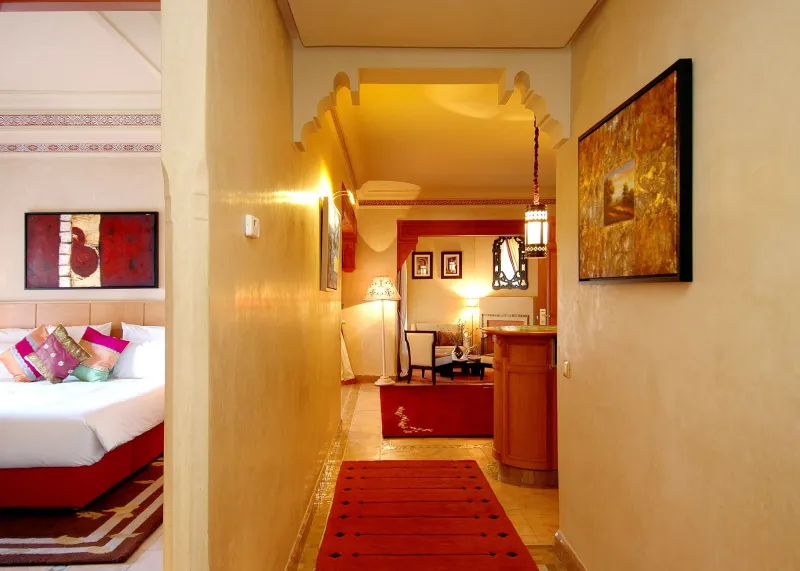
The condition of the room when your companion arrives communicates more than you may realize. A space that is tidy, thoughtfully lit, and free of the detritus of a long travel day signals that her presence was anticipated with care. This is not merely aesthetic — it establishes a tone of mutual respect that elevates the entire encounter.
Adjust the lighting before she arrives. Harsh overhead fixtures rarely serve anyone well; request extra towels in advance rather than calling for them mid-evening; set the temperature to something comfortable rather than the aggressive air conditioning default that most American hotel rooms seem to favor. These are small gestures, but they are the gestures of a man who has done this thoughtfully.
If you plan to order room service, review the menu beforehand and have a preference ready. Asking your companion to wait while you deliberate over the menu is an avoidable disruption to the evening's rhythm.
Noise, Neighbors, and the Invisible Presence
Sound travels in hotels. This is an architectural reality that the discerning gentleman accounts for rather than discovers. Keep voices at a register appropriate to private conversation. If music or television is playing, let it serve as ambient texture rather than volume cover — the latter strategy tends to produce the opposite of its intended effect.
Be mindful of corridor behavior when your companion arrives and departs. The hallway is not private space. A brief, composed greeting at the door is entirely sufficient. Extended conversations in the corridor, or any behavior that might prompt a neighbor to glance through their peephole, are simply poor form.
If you order room service during the evening, place the tray outside the door promptly when finished. A tray left in the room until the following morning is a minor thing — but minor things accumulate.
The Checkout: Finishing as You Started
How an evening concludes is as important as how it begins. Allow sufficient time for your companion's departure before your own checkout, so that neither of you is navigating the lobby simultaneously in a manner that invites association.
When you check out — whether at the desk or via express checkout — do so with the same composed brevity you brought to check-in. If staff inquire about your stay, a simple affirmative is sufficient. You are not obligated to elaborate, and elaboration serves no one.
Settle any incidentals that may have accumulated — room service, minibar, parking — without visible surprise or irritation. A gentleman who budgets for the full experience, including its margins, is a gentleman who departs as smoothly as he arrived.
A Final Word on Respect
Every person you interact with during a hotel stay — the valet, the front desk agent, the housekeeper, the room service attendant — is a professional providing a service. They deserve the same courteous treatment you would extend in any professional context. Beyond the ethical dimension, treating hotel staff with genuine respect is also the most reliable method of ensuring their discretion. People remember how they were made to feel. A gentleman who tips appropriately, speaks pleasantly, and creates no unnecessary complications is one who leaves no lasting impression — which, in this context, is exactly the point.
The hotel, properly navigated, is one of the finest settings available for a refined companionship experience. It offers privacy, comfort, and a degree of anonymity that few other environments can match. The difference between an evening that unfolds with effortless elegance and one that feels unnecessarily fraught lies almost entirely in the preparation and awareness you bring to it.