From Promising to Profound: The Gentleman's Guide to Elevating a Second Encounter with a Companion
From Promising to Profound: The Gentleman's Guide to Elevating a Second Encounter with a Companion
There is a particular kind of pressure that surrounds a first meeting — the careful attention to presentation, the measured opening remarks, the quiet effort to establish oneself as a worthy and respectful presence. Much has been written, and rightly so, about that inaugural impression. Yet the second encounter carries its own distinct weight, one that fewer gentlemen pause to consider with the seriousness it deserves.
If the first meeting is the audition, the second is the performance. It is here that a man reveals whether his initial charm was genuine or merely rehearsed. A companion who has met you once has already formed an impression. What she has not yet determined is whether you are the kind of person worth knowing more deeply. That question is answered — quietly, elegantly — in how you choose to return.
The Memory Is the Message
Perhaps the single most powerful gesture a gentleman can offer upon a second meeting is evidence that he was truly present during the first. Not in a performative sense — not by arriving with a prepared list of callbacks — but through the kind of natural, unhurried recall that signals genuine attentiveness.
If she mentioned a preference for a particular style of restaurant, consider whether your chosen venue reflects that. If she referenced a city she had recently visited, a single thoughtful question — How did the trip conclude? — communicates volumes without requiring effort or elaboration. These small acknowledgments are not flattery. They are proof of presence, and in the context of refined companionship, presence is among the rarest currencies a man can offer.
The gentleman who remembers is the gentleman who is remembered.
Resist the Urge to Replicate
One of the more common missteps made by otherwise well-intentioned men is treating the second encounter as a direct continuation of the first — same venue, same conversational rhythm, same general approach. The instinct is understandable. What worked before feels safe to repeat.
But a companion who is accustomed to discerning company will notice the absence of evolution. Comfort is a worthy goal; stagnation is not. The second meeting should feel familiar in warmth while offering something new in dimension.
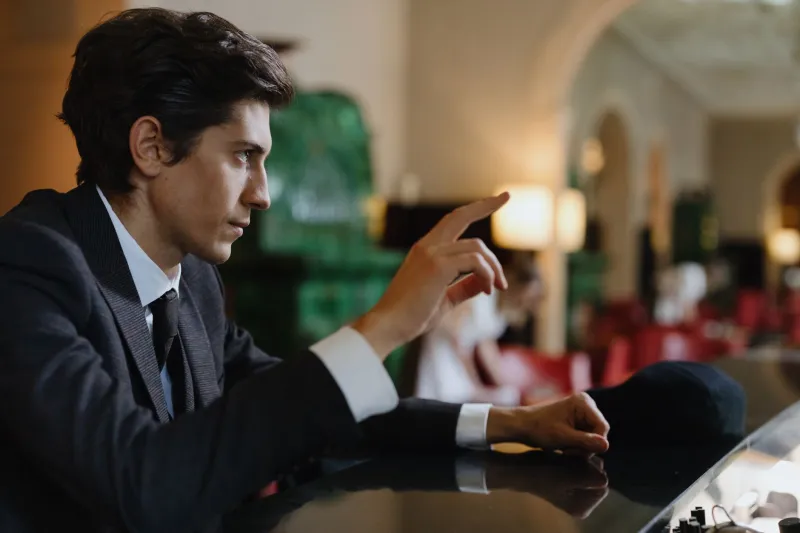
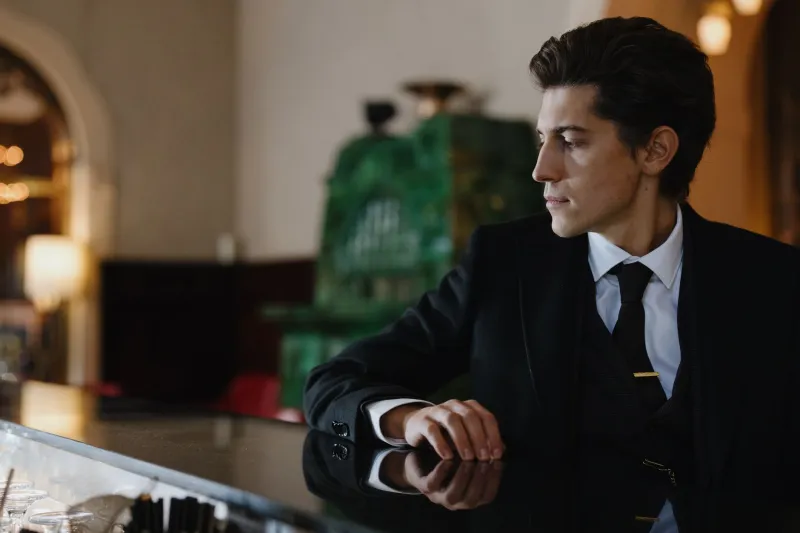
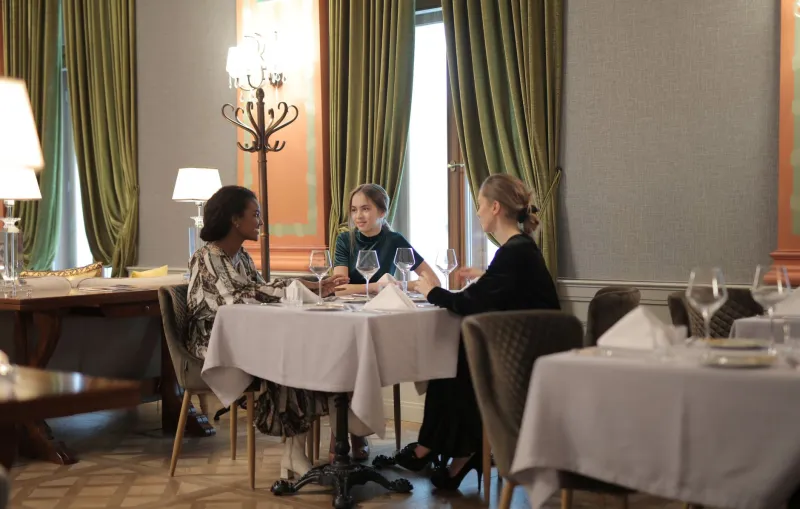
Consider varying the setting deliberately. If the first evening was spent in a hotel bar with a certain formality, the second might unfold in a quieter, more intimate restaurant — somewhere that invites a slightly different register of conversation. The environment itself sends a signal: I have thought about this. I have thought about you.
Demonstrate Growth, Not Performance
Emotional intelligence, in the context of refined companionship, is not about vulnerability or disclosure. It is about the capacity to read a room, to sense what is welcome and what is not, and to respond with calibrated grace rather than scripted charm.
On a second meeting, a gentleman has the advantage of context. He knows, at least in broad strokes, what his companion finds engaging and what she navigates past with polite efficiency. The emotionally intelligent man uses that knowledge not to engineer a desired outcome, but to create an environment where the conversation can move naturally toward depth.
This might mean asking a question rather than offering an opinion. It might mean allowing silence to settle comfortably between exchanges rather than filling every pause with commentary. It might mean simply acknowledging, directly and without ceremony, that you enjoyed the first meeting — not as a preamble to expectation, but as a sincere statement of appreciation.
The Subtle Architecture of Appreciation
Genuine appreciation is one of the most underestimated tools in a gentleman's social repertoire, particularly in the context of ongoing companionship. There is a meaningful distinction, however, between appreciation that is expressed and appreciation that is demonstrated.
Expressing appreciation is easy — a brief remark, a polite acknowledgment. Demonstrating it requires intention. It might take the form of a small, considered gesture: arriving with something she mentioned enjoying, or having arranged a detail of the evening in advance that reflects her preferences rather than your own defaults.
These gestures need not be extravagant. In fact, the most effective ones rarely are. A single stem of a flower she once mentioned admiring carries more weight than an elaborate arrangement chosen without context. Specificity, as in most things related to genuine connection, outperforms scale.
Recalibrate Your Conversational Ambitions
A first meeting is, by its nature, somewhat exploratory — a mutual assessment conducted beneath a layer of pleasantries. The second meeting, if the first went well, allows for a degree of candor that was not yet available. A gentleman who recognizes this shift — and who moves with it rather than remaining anchored in the register of introduction — will find that the quality of exchange rises considerably.
This does not mean pressing toward intimacy prematurely or abandoning the measured pacing that defines a cultivated evening. It means being willing to engage more directly with ideas, preferences, and perspectives. Ask her opinion on something you genuinely want to understand. Share a view you hold with some conviction, not to impress, but to invite a real response.
The companion who feels she is being engaged as a whole person — rather than as a pleasant backdrop to a gentleman's own performance — is the companion who will look forward to a third meeting.
Closing the Evening with Forward Intention
How a gentleman concludes the second encounter matters as much as how he opened it. The close of an evening should feel neither rushed nor artificially prolonged. It should carry a sense of natural completion — the kind that leaves both parties with a quiet satisfaction rather than an unresolved question.
If you wish to meet again, say so. Not as a negotiation, not as an assumption, but as a genuine expression of interest. A simple, unhurried statement — I would welcome another evening like this — is both dignified and clear. It places no obligation, creates no pressure, and yet communicates exactly what it intends to.
The second meeting, done well, is not merely a continuation of the first. It is a transformation — from the promising into the profound, from the initial into the intentional. And it is in that transition, navigated with care and emotional sophistication, that the most rewarding companionship connections are quietly, enduringly made.